
Chocolate Gift Box Printing Knowledge and Food-Grade Processes

Chocolate gift boxes not only serve as product packaging but also directly influence consumers’ first impressions of quality and brand. For this type of food packaging, printing processes not only affect visual presentation but also material safety, contact standards, and packaging durability. Especially in gift box products, a balance between high-end quality and food-grade requirements is often necessary. Therefore, understanding chocolate gift box printing knowledge and related process selection has practical reference value for packaging design and production.
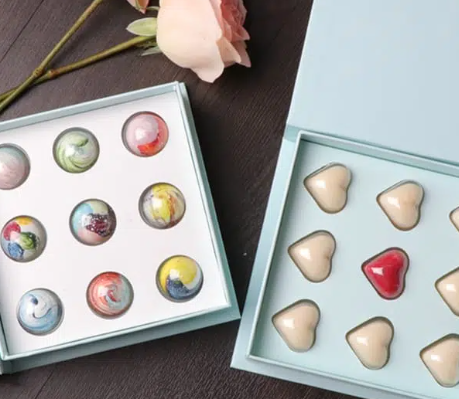
The Importance of Food-Grade Printing Material Selection
Chocolate gift boxes fall under food-related packaging, and material selection must prioritize safety and stability. The paper, inks, and auxiliary materials used in the printing process must all meet relevant food packaging requirements to avoid migration risks or odors affecting product quality. Chocolate, in particular, is sensitive to temperature and odor; insufficient stability of packaging materials may affect the product’s storage experience. Food-grade paper is generally more suitable for this type of packaging in terms of safety, cleanliness, and printability, while also helping to maintain the overall quality of the gift box.
Ink Processing Affects the Visual Appeal and Usability of Gift Boxes
Chocolate gift boxes often emphasize visual sophistication, therefore, the choice of ink processing directly impacts the final product. Different printing inks vary in color reproduction, adhesion, and abrasion resistance, requiring matching based on the packaging’s positioning. Standard graphic printing focuses on basic clarity, while high-end gift boxes often incorporate spot color printing and targeted effect processing to enhance visual depth. Simultaneously, ink stability is crucial; if the surface is prone to fading or damage from friction, it reduces the perceived quality of the packaging. Therefore, visual appeal and usability must be considered simultaneously.
Common Food-Grade Processes Enhance Packaging Quality
Beyond basic printing, chocolate gift boxes typically incorporate food-grade post-processing to optimize packaging performance and texture. These processes affect both visual presentation and the actual user experience.
- Lamination enhances moisture resistance and surface protection.
- Hot stamping enhances the high-end visual appeal of gift boxes.
- Embossing enhances tactile feel and layering.
- Food-grade lining improves product contact safety.
- Oil-resistant treatment improves packaging stability during transportation.
A reasonable combination of these processes can improve the overall quality of the gift box while ensuring safety.
Paper Material Structure Design Affects Packaging Protection
Besides its display function, chocolate gift boxes also need to provide protection; therefore, paper material structure design is equally important. Different thicknesses, stiffnesses, and composite structures of paper materials affect the box’s pressure resistance and transportation stability. For chocolate products susceptible to compression or temperature changes, packaging with better structural support is even more crucial. Some gift boxes also employ multi-layered designs, balancing the visual appeal of the outer box with the protection needs of the inner layers, making the packaging not only look exquisite but also more practical. A reasonable structural design can reduce transportation losses and improve the overall packaging experience.
Printing Quality and Food-Grade Processing Must Be Coordinated
In chocolate gift box design, printing quality and food-grade processing are not independent but need to be coordinated. If only visual appeal is emphasized while material and process safety standards are ignored, potential risks may arise in the actual application of the packaging; conversely, focusing solely on basic safety may weaken the brand’s presentation. The ideal approach is to comprehensively configure paper materials, inks, and processing solutions based on product positioning, sales scenarios, and packaging needs, ensuring the gift box simultaneously meets visual quality, structural stability, and food-grade requirements. This enhances the packaging’s value and better aligns with the development needs of high-quality food packaging.

