
What are the differences between spot UV and overall UV printing?

UV printing is a process that cures inks using ultraviolet light, widely used in packaging, promotional materials, and high-end printed materials. Spot UV and overall UV are two common forms, differing significantly in their process scope, visual effects, and application scenarios. Understanding these differences helps in making more appropriate choices in actual printing design.
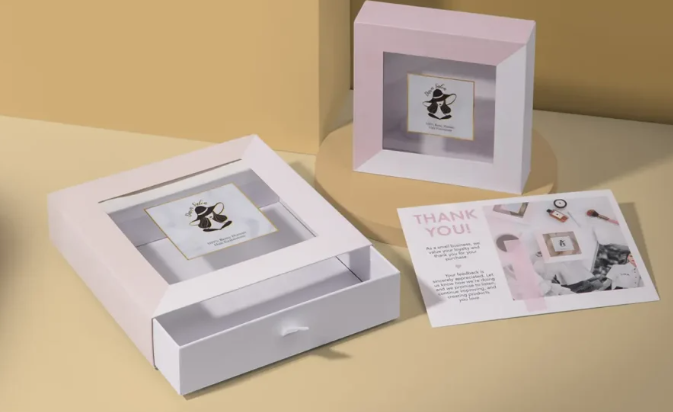
Different Coverage Areas Determine Differences in Presentation
The most obvious difference between spot UV and overall UV is the coverage area. Spot UV only applies the UV coating to specific areas of the design, such as logos, text, or key graphic elements, while other areas retain their original printing effect. This method creates a strong contrast, making key content stand out more.
Overall UV, on the other hand, evenly covers the entire printing surface with a UV coating, giving the entire printed product a glossy or matte finish. Due to the larger coverage area, the overall visual effect is more unified, but the prominence of key areas is relatively weaker.
Significant Differences in Visual Depth
Spot UV emphasizes visual depth, enhancing the three-dimensionality of the image through localized highlights, making specific elements more attractive. Under illumination, localized UV coating produces a noticeable reflective effect, enhancing visual impact.
Overall UV coating, on the other hand, focuses on overall texture consistency, improving overall smoothness and color saturation through uniform coating, making printed materials appear more refined, but without emphasizing any particular area.
- Localized UV highlights key information
- Overall UV enhances overall texture
- Localized UV coating offers more layered variation
- Overall visual uniformity and stability
- Localized UV coating is more suitable for emphasizing brand elements
Differences in Production Process Complexity
Localized UV coating requires precise positioning and zoning during production, demanding high-quality design documents. The UV areas need to be clearly defined before printing, and localized coating is performed using specialized equipment, making the process relatively complex.
Overall UV coating is applied uniformly after printing, without the need for complex area differentiation, making the operation process relatively simple. Overall UV coating is generally faster in terms of production efficiency, but localized UV coating requires higher precision.
Differences in Cost and Application Scenarios
Due to the different levels of process complexity, the two UV coating methods also differ in cost. Spot UV coating is generally more expensive due to the additional positioning and processing steps required, while overall UV coating is relatively cheaper because the process is more standardized.
Spot UV coating is more suitable for high-end packaging, brand brochures, and products where visual emphasis is needed. Overall UV coating is often used for high-volume printing, such as regular covers, posters, or flyers, focusing more on enhancing the basic texture.
Applicable Design Styles and Industry Needs
Different design styles also influence the choice of UV coating process. Spot UV coating is more suitable for designs that emphasize details and brand identity, such as luxury packaging or high-end gift boxes, using spot highlights to enhance brand recognition.
Overall UV coating is more suitable for designs that require a unified visual style, such as commercial promotional materials or basic packaging designs, using a uniform coating to improve the overall quality. Choosing the appropriate UV coating method based on different application scenarios can better improve the final appearance of the printed materials.

