
How much do custom packaging boxes cost?

“How much does a custom packaging box cost per unit?” This question may seem simple, but it is difficult to answer with just one figure when preparing an actual quotation. Even for the same type of paper box, slight changes in size, paper, box style, printing process, or order quantity can create significant differences in unit price. Some buyers receive a low initial quote but later find that costs increase after adding foil stamping, specialty paper, and inserts. Others set their budgets too high from the beginning and end up spending more than necessary. To keep packaging costs under control, the key is to understand where each charge on the quotation comes from.
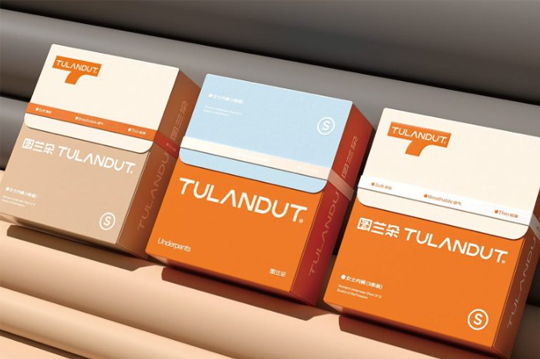
How Is the Price of Custom Packaging Boxes Calculated?
Custom packaging boxes are usually not priced simply as “how much one box costs.” Instead, material, production, and finishing costs are calculated separately. The following factors are most likely to affect the final unit price:
- Material costs: White cardboard, corrugated paper, greyboard, specialty paper, and other materials have different prices. Paper thickness also affects material usage.
- Box style costs: Standard folding cartons have simple structures and fewer production steps. Magnetic boxes, rigid lid-and-base boxes, drawer boxes, and other complex styles require more processing, which naturally increases costs.
- Printing costs: Standard CMYK printing does not cost the same as foil stamping, UV coating, embossing, spot colors, and other special processes.
- Order quantity: Custom packaging involves fixed upfront costs such as plate making and die cutting. As the order quantity increases, these costs can be spread across more boxes, so the unit price usually decreases.
This is why boxes of the same size can receive completely different quotations. When comparing prices, make sure the materials, structure, finishing processes, and quantities are based on the same conditions.
How Much Do Custom Packaging Boxes Usually Cost?
Looking only at the price per box can easily lead to an inaccurate budget. A more practical approach is to separate sampling costs from mass-production costs.
At present, packaging samples generally fall within the following reference ranges:
- Basic samples with standard structures and commonly used materials usually cost around RMB 50–200 per piece.
- Samples requiring special structures or specialty materials generally cost around RMB 200–500 per piece.
- Digital samples usually cost RMB 50–150 per piece and are mainly used to confirm the design effect during the early stage.
- Handmade structural samples generally cost around RMB 150–300 per piece and are more suitable for testing complex box styles.
- Finished samples with complete printing and surface finishing usually cost RMB 200–500 per piece.
Mass production does not have one standard unit price that applies to every box style. Quotations are usually calculated based on size, material, box style, printing, surface finishing, and quantity. The larger the order, the more easily fixed costs such as plate making and die cutting can be spread out, making the unit price more competitive.
If you only need a small quantity of packaging, do not focus solely on the option with the lowest unit price. Sampling, special finishing processes, and shipping costs may all affect the final budget.
Which Factors Are Most Likely to Increase the Quotation?
When preparing a packaging budget, several costs are easy to overlook. In many cases, a box becomes a premium solution not because its size has increased, but because additional processing steps have been added.
- Foil stamping, UV coating, embossing, and other special processes: Each additional process may add a corresponding processing fee.
- Complex box styles: Irregular structures, magnetic closures, and multi-layer designs require more production steps and can cost significantly more than standard folding cartons.
- Specialty materials: Specialty paper, thick greyboard, and special eco-friendly materials may increase the quotation because of their material costs alone.
- Inserts and accessories: Foam, paper cards, plastic trays, velvet linings, and similar components may be small in size but still add to the overall packaging cost.
- Small order quantities: The same die-cutting and plate-making costs are distributed very differently when producing 500 boxes compared with 5,000 boxes.
As a general reference, the standard MOQ for standard paper boxes and folding cartons usually starts at 100–500 pieces, while premium rigid boxes may require higher quantities because they are more complex to manufacture and assemble.
What Other Costs Should You Confirm When Requesting a Quotation?
Do not look only at the “unit price” on a packaging quotation. Before placing an order, confirm whether the quotation includes sampling, die cutting, printing, post-processing, inserts, and shipping. For export orders, also check whether the quotation is based on FOB or CIF, as these two terms cover different ranges of transportation costs. Packaging boxes are relatively bulky, so shipping costs are affected by the destination, transportation method, and total order volume and usually need to be calculated separately.
The production schedule should also be confirmed. A complete standard custom packaging project usually takes 3–6 weeks. A factory’s standard production time is generally around 10–30 working days. Folding cartons and mailer boxes usually take approximately 12–18 working days, while premium rigid boxes generally require around 22–28 working days. If the design, dimensions, and materials remain unchanged, repeat production can skip some sampling steps, making the schedule easier to control.
The cost of custom packaging boxes is not determined by the word “box” alone. It depends on the size, material, structure, finishing processes, and order quantity. To keep the budget reasonable, first determine the box style and dimensions, then control the materials and finishing processes. There is no need to add every special effect simply to make the packaging look more premium. When requesting a quotation, confirm sampling, production, post-processing, and shipping costs item by item. This will give you a price that is much closer to the actual final cost.

