
How many custom boxes should I order the first time?

When ordering custom packaging boxes for the first time, the biggest challenge is often not the design, but the quantity. Order too few and the unit price may be higher. Order too many and the product may not sell fast enough before the boxes start taking up valuable warehouse space. Minimum order quantities can vary widely, with some projects available from 100 units while other standard packaging projects may require 1,000 units or more. For new products, first e-commerce launches, or brands ordering custom packaging for the first time, 500 and 3,000 boxes represent completely different purchasing strategies. The right quantity depends on expected sales, packaging stability, and how quickly the boxes are likely to be used.
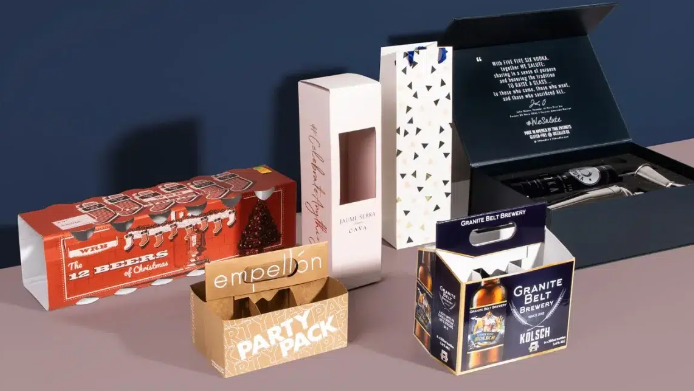
How Many Custom Packaging Boxes Should You Order for the First Time?
For a first order, it is usually better not to focus entirely on getting the lowest possible unit price. Packaging is different from ordinary consumables. Once the box size, logo, product specifications, or structure changes, leftover inventory may become difficult to use. Custom packaging minimums on the market can range from around 100 units to more than 1,000 units, so it helps to look at several quantity levels before placing an order.
- 100–300 units: Suitable for early-stage testing
If the product is still being tested or the packaging needs further adjustment, a small order can be a practical choice. At this stage, the priority should be confirming the box structure, product fit, dimensions, and printing quality rather than pushing the unit price as low as possible.
- Around 500 units: Suitable for an initial sales run
If the product is ready for launch but sales have not yet become predictable, around 500 units can provide a reasonable balance. It allows the business to test actual sales without tying up too much money in packaging inventory.
- 500–1,000 units: Suitable when the packaging plan is already clear
If product specifications and packaging structure have been confirmed, the first order can be increased to this range. Gift boxes and premium rigid boxes may also require closer attention to materials and finishing, so quantity should not be the only consideration.
- 1,000–3,000 units: Suitable for stable products
When a product has consistent sales and the packaging design is unlikely to change soon, ordering a larger quantity can help spread fixed costs such as tooling, setup, and production.
Before placing the order, it is useful to request quotes for 100, 500, 1,000, and 3,000 units at the same time. Do not focus only on the minimum order quantity. Look at how much money each quantity requires and how long the inventory is likely to last.
When Should You Order Fewer Boxes, and When Can You Order More?
The right packaging quantity depends heavily on the stage of the product. New products, seasonal products, and established products do not need the same purchasing strategy. When ordering custom packaging for the first time, leaving some room for future changes can be more practical than simply chasing the lowest unit price.
- New products should usually start with a smaller quantity
When there is not enough sales data, packaging designs may still change. A smaller first order reduces the risk of being left with unusable packaging inventory.
- E-commerce products under testing need more flexibility
Online products often change in size, product combinations, promotions, or packaging requirements. If different SKUs may require new packaging later, a smaller order makes future adjustments easier.
- Seasonal products should be planned around the sales cycle
Holiday gift boxes and promotional packaging often have a limited selling period. Ordering too many boxes can leave a large amount of inventory after the campaign ends.
- Rigid boxes and magnetic boxes require closer attention to MOQ
These packaging formats often involve more complicated structures and finishing processes. Minimum order quantities, sampling costs, and production costs can be higher than those of standard folding cartons.
- Mature products can justify larger orders
When sales are stable and the packaging size and design are unlikely to change, larger orders can provide better unit pricing and reduce the need for frequent reorders.
If 500 boxes can be used within six months while 3,000 boxes would take two or three years to consume, the larger order may not be the better deal even if its unit price is lower. Packaging purchasing should control unused inventory, not just the price of each box.
How Should You Compare Price and MOQ for Your First Custom Packaging Order?
Minimum order quantities can vary significantly between different packaging types. Some market offerings allow folding cartons to start from around 1,000–3,000 units, while rigid boxes are commonly offered around 500–1,000 units. Some suppliers may also support smaller runs of 100–300 units. The actual quantity can still vary with box structure, material, printing, and finishing requirements.
| Order Quantity | Suitable For | What to Check |
| 100–300 units | New product testing and small-scale validation | Unit price, sample quality, small-order availability |
| Around 500 units | Initial product launch | Unit price, inventory cycle, reorder conditions |
| 500–1,000 units | Gift boxes, rigid boxes, and similar projects | Structure, materials, finishing, production time |
| 1,000–3,000 units | Stable products with established packaging | Unit price, inventory turnover, future reorders |
| 3,000+ units | Long-term fixed packaging and stable sales | Volume pricing, warehouse capacity, redesign risk |
When comparing quotes, look at the quantity, unit price, sampling fee, tooling fee, printing, and finishing costs together. A package that appears cheaper per box may require a larger upfront investment and create more inventory pressure, so the overall cost may not be as attractive as it first appears.
What Are the Most Common Mistakes When Ordering Custom Packaging for the First Time?
Problems with a first custom packaging order often come from details that were not considered before production. Product dimensions, packaging quantity, and possible future changes should all be reviewed before placing a bulk order.
- Starting bulk production without testing the real product
A real case from the dessert industry involved a business that created a custom gift box for macarons. The box was designed to hold 20 macarons, but the actual box could only fit around 16–18. About 500 boxes had already been purchased, and the problem happened during the Christmas sales period. After those boxes were used up, the business switched to clear blister packaging, which provided a better fit and made the products easier to display.
- Looking only at MOQ instead of inventory cost
Being able to order 500 boxes instead of 3,000 does not automatically make the smaller order more expensive. If the larger order creates years of excess inventory, the lower unit price may not provide a real advantage.
- Assuming different product sizes can use the same packaging
Products within the same series may appear similar in size, but actual packaging requirements can differ because of product height, inserts, sleeves, or opening structures. Forcing different SKUs into one packaging specification can create problems during actual use.
- Ignoring the possibility of future packaging changes
New products often go through changes to logos, product names, specifications, or box structures. If the design may be updated within six months, there is little reason to place a very large first order.
- Comparing only the box price
The real purchasing cost includes sampling, production, shipping, storage, and future reorders. A lower unit price does not help much if the packaging sits in storage for years.
For a first custom packaging box order, a safer approach is to confirm product fit, packaging structure, and sales speed before deciding on the final quantity. When demand is still uncertain, a smaller trial order provides more flexibility. Once the product becomes stable, the order quantity can gradually increase. By considering quantity, price, and inventory risk together, businesses can avoid ordering too many boxes while reducing the need for frequent reorders. INS PACKAGING can support businesses with custom packaging box design, sampling, and mass production, helping match packaging quantities with actual product requirements.

