
What Materials Make Custom Packaging Boxes More Durable?

A packaging box may look sturdy but fail to hold up once a product is placed inside. Some boxes sag at the bottom under the product’s weight. Others arrive with crushed corners after courier delivery, while some develop cracks along the creases when opened. These problems do not always mean the paper is too thin. The material, box structure, and product weight may simply be poorly matched. White cardstock, greyboard, kraft paper, and corrugated board each serve different purposes, so appearance and thickness alone are not enough to determine durability. Before choosing materials for custom packaging boxes, consider whether the packaging is intended for retail display, gift presentation, or long-distance shipping. Board stiffness, bottom support, and internal cushioning all matter. The right material can make packaging more reliable and help avoid unnecessary costs caused by a poorly designed structure.
Which Paper Materials Are Best for Durable Custom Packaging Boxes?
Different paper materials have different strengths. The key to durable packaging is choosing a material that can handle the intended use rather than automatically selecting the thickest board.
- White Cardstock: Suitable for cosmetics, food products, and everyday retail goods. Its smooth surface supports clear, detailed printing and attractive product presentation.
- Greyboard: Commonly used for premium gift boxes and rigid packaging. It provides good structural support and helps the box maintain its shape.
- Corrugated Board: Its fluted inner layer provides cushioning, making it suitable for shipping cartons and mailer boxes.
- Kraft Paper: Known for its natural appearance, kraft paper works well for minimalist packaging, some product boxes, and shipping cartons.
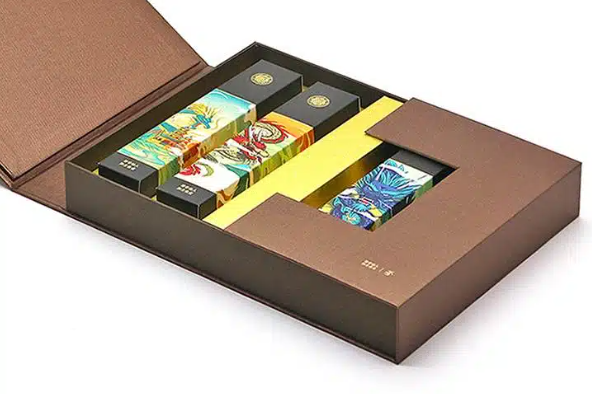
- Specialty Paper: Textured or specially finished paper can give gift packaging a distinctive look. However, stiffness, folding performance, and suitability for the intended use still need to be checked.
White cardstock may be a good choice for products displayed on retail shelves. Greyboard structures are worth considering for heavier gifts, while corrugated cartons are often more suitable for goods that undergo repeated handling. The material name is only a starting point. Actual performance also depends on board grade, structural design, and finished-box testing.
Are Thicker Paper Materials Always More Durable?
Board thickness affects stiffness, but it does not determine the strength of an entire box on its own. Crease lines, glued joints, and bottom construction all influence how a folding carton performs. Rigid gift boxes require a suitable combination of greyboard and wrapping paper, while shipping cartons depend on flute structure, liner quality, and stacking pressure. Boards that are too thin may deform under the product’s weight. Overly heavy specifications, however, can increase material use, package weight, and shipping costs. When selecting materials, consider product weight, box dimensions, packing methods, and shipping conditions together. Rather than simply increasing thickness, produce a sample with the actual product inside and inspect the bottom, corners, and closure points for signs of weakness.
How Do You Choose the Right Specifications for Cardstock, Greyboard, and Corrugated Board?
Paper weight, board thickness, and corrugated structure are different measurements and should not be compared directly. The following specifications can serve as an initial reference. The final choice should depend on product weight, box design, and manufacturing requirements.
| Material Type | Common Specification Reference | Suitable Applications |
| White Cardstock | Approximately 250–400 gsm | Cosmetics, everyday products, lightweight retail packaging |
| Greyboard | Approximately 1.0–3.0 mm | Gift boxes, premium boxes, rigid packaging |
| E-flute Corrugated Board | Approximately 1.5 mm thick | Small mailer boxes, lightweight shipping packaging |
| B-flute Corrugated Board | Approximately 3.0 mm thick | Standard shipping cartons, e-commerce packaging |
The selection can then be refined based on how the packaging will be used.
- Lightweight Retail Products: Check box stiffness, resistance to cracking along creases, and the overall print quality.
- Heavier Products: Pay attention to bottom support and joint strength. The box structure may need reinforcement rather than simply heavier paper.
- Glass Bottles and Fragile Goods: Add paper inserts, dividers, or other cushioning materials to limit movement inside the box.
- Export Shipments: Consider handling, stacking, and transportation conditions. Carton compression or shipping tests may be necessary.
These specifications are not universal rules. Two boards with the same thickness may perform differently because of variations in paper quality, flute structure, and manufacturing methods. Before mass production, test the actual product inside the box and check for deformation, closure strength, and the effectiveness of the internal supports.
What Should You Check When Ordering Durable Custom Packaging Boxes?
Material selection is only part of the process. The finished structure and manufacturing quality are equally important. For packaging that will travel long distances or be opened repeatedly, a few easily overlooked details can make a significant difference in durability.
- Bottom Support: Check whether the base sags after the product is packed.
- Corners and Creases: Look for visible cracking along folded edges.
- Glued Joints: Make sure seams remain secure and closures do not come loose easily.
- Internal Fit: Gently shake the packed box to see whether the product moves excessively.
- Moisture Protection: Consider how exposure to humidity may affect the paper.
- Stacking Performance: Check whether cartons deform when stacked for storage or shipping.
Do not judge durability by examining an empty box alone. Once the actual product is packed inside, weight distribution, pressure on the base, and available internal space become much more apparent. For international shipments, also consider outer carton dimensions, packing arrangements, and the risk of compression during transit.
If you are looking for durable custom packaging boxes for your products, send us your product dimensions, weight, intended use, and shipping requirements. We can discuss suitable paper specifications, box structures, internal cushioning, and printing options based on your needs. You can also share an existing packaging sample to help ensure the final design suits your product’s display, storage, and transportation requirements.