
Common Printing Techniques for Jewelry Boxes

Jewelry boxes are not only the outer protective structure of product packaging, but also play an important role in showcasing brand image. The choice of printing process directly affects visual texture, tactile experience, and overall quality. Different processes have their own characteristics in terms of presentation effect and application scenarios; a reasonable combination can make jewelry boxes more attractive.
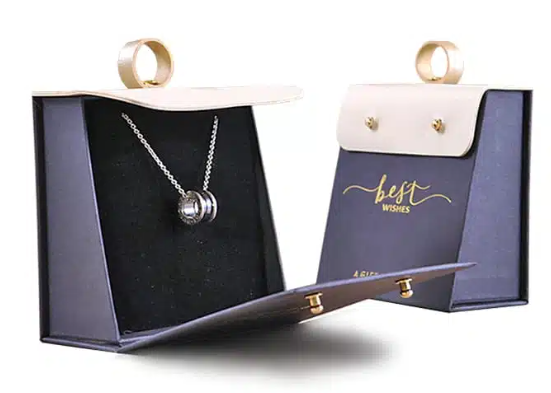
Application Characteristics of Offset Printing
Offset printing is widely used in jewelry box production and is suitable for mass customization. Its advantages lie in stable color, high pattern reproduction, and the ability to present rich visual layers. For complex patterns or gradient designs, offset printing can maintain good clarity, making the overall image more delicate and unified.
In practical applications, offset printing is often used for the following types of design expression:
- Basic brand visual presentation: Suitable for LOGOs, standard color blocks, and basic graphics, ensuring consistent recognition.
- Large-area pattern printing: Can stably present background patterns and is less prone to color difference problems.
- Fine illustrations and texture design: Suitable for decorative patterns that require detailed expression.
By combining different design elements, offset printing can provide a stable and high-quality visual foundation for jewelry boxes.
Visual Enhancement Through Hot Stamping and Silver Foil
Hot stamping and silver foil stamping use metallic foil transfer to give patterns a glossy finish, often used to highlight brand names or key decorative areas. This technique significantly enhances the high-end appeal of packaging, creating a strong visual contrast and making the overall design more eye-catching.
UV Coating and Localized Reinforcement
UV coating uses spot application of varnish to create a high-gloss or three-dimensional effect, often used to emphasize logos or key graphics, enriching the visual layers. Simultaneously, the UV coating enhances abrasion resistance, ensuring the pattern remains clear over long-term use.
Tactile Expression Through Embossing and Debossing
Embossing and debossing use molds to create textures on the paper surface, giving packaging a unique tactile experience. This technique not only enhances visual depth but also improves tactile feedback, making the overall texture more three-dimensional, and is often used in high-end jewelry box designs.
Lamination and Surface Protection Processes
Lamination is primarily used to protect the printed surface and enhance durability. Common types include matte lamination and glossy lamination. Matte lamination offers a soft texture, suitable for minimalist designs; glossy lamination enhances color performance, making the image more vivid, while also providing scratch and moisture resistance.
The appropriate selection and combination of printing processes for jewelry boxes can significantly improve packaging quality and brand presentation. By combining different processes, a balance can be achieved between visual appeal and practicality, making jewelry packaging more competitive in the market.

