
Custom packaging boxes vs stock boxes: which is better?

When choosing product packaging, many business owners struggle with the same question: should they buy stock boxes for convenience, or choose custom packaging boxes for a better appearance? If you only compare the unit price, it is easy to make the wrong decision. Stock boxes can indeed save money at the beginning and are ready to use immediately. However, if the size is not suitable, the costs of filling materials, storage space, and shipping may all increase. Custom packaging boxes require design, sampling, and production, so the initial investment is higher, but the box style, size, and printing can all be tailored to the product. The most suitable option depends on product sales, shipping frequency, and branding requirements.
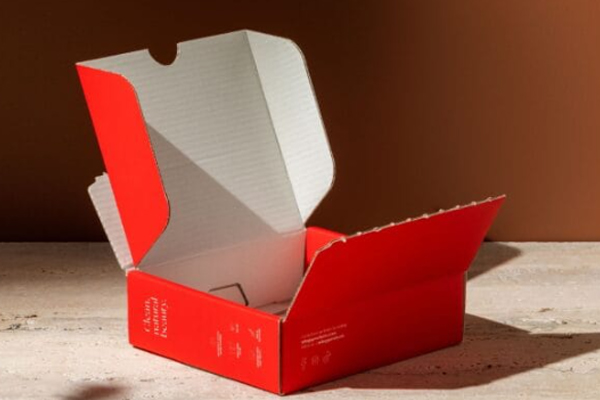
What Products Are Suitable for Stock Boxes?
The biggest advantage of stock boxes is speed. If products need to be shipped soon and there is not enough time to wait for production, choosing a standard size can make the process much easier. For small brands that are just starting to sell, stock boxes can also be used to test the market without preparing a large amount of packaging inventory at once.
- New product testing stage: When sales are not yet stable, buying a small quantity of stock boxes can reduce inventory pressure.
- Temporary restocking: If the original packaging suddenly runs out, stock boxes can quickly solve shipping problems.
- Products with standard specifications: If the product has regular dimensions and a standard box fits it well, there is no need to develop a new box style specifically for the packaging.
- Limited budgets: At the beginning of a business, funds need to be spent on products, promotion, and inventory. Stock boxes can reduce the initial investment in packaging.
Although stock boxes are inexpensive, their size still needs to be selected carefully. If the box is too large, more filling material will be needed inside. If it is too small, the product may be squeezed. A common approach is to leave some extra space inside the box for cushioning materials, but not too much. Otherwise, the packaging may become unnecessarily large and increase shipping costs.
Why Do Custom Packaging Boxes Cost More?
The cost of custom packaging boxes is often not limited to the paper or board itself. Design, die making, sampling, printing, and finishing processes can all affect the quotation. Fortunately, these costs do not need to be paid again every time. Once the box style has been finalized, subsequent mass production becomes much easier.
Custom packaging boxes may be suitable in the following situations:
- The product has unusual dimensions: Standard stock boxes may be too loose or too tight, while custom sizes can fit the product more closely.
- A logo needs to be printed: The brand name, logo, and product information can be printed directly on the box, creating a more complete visual effect than a plain box.
- An insert is needed for protection: Products such as skincare items, jewelry, and glass bottles require better fixation and impact protection. Custom packaging can include a specially designed insert.
- The product will be sold long term: Once sales become stable, using the same packaging continuously makes it easier to control the size and appearance through custom production.
- The unboxing experience matters: If customers directly interact with the packaging after receiving the product, the box style, color, and printing quality will all affect their first impression.
For branded products, custom packaging boxes also offer an easily overlooked benefit: every shipment becomes an opportunity to display the brand. Consistent logos, colors, and box styles make the product easier for consumers to remember.
How Can You Compare the Real Cost of Both Packaging Options?
Comparing only the price of one box can easily lead to an inaccurate calculation. When purchasing packaging, you should consider packaging, filling materials, inventory, storage, and shipping together. This result will be closer to the actual cost than simply comparing supplier quotations.
You can use the following formula to estimate the actual packaging cost per shipment:
Actual packaging cost = Box unit price + Filling material cost + Packaging labor cost + Average storage cost + Additional shipping cost + Damage and loss cost
The following costs should be recorded carefully:
- Packaging price per unit: Record the prices of both stock and custom boxes instead of looking only at the lowest quotation. For example, if a stock box costs RMB 2 and a custom box costs RMB 3, the custom box appears to be RMB 1 more expensive. However, if the custom box requires much less filling material, the actual difference may not be that large.
- Monthly usage: If you use 1,000 packages per month and the difference between the two boxes is RMB 0.50 per unit, the monthly difference is RMB 500, or RMB 6,000 per year. The greater the usage, the more important the unit price difference becomes.
- Filling material usage: If each stock box requires RMB 0.80 worth of bubble wrap, shredded paper, or foam, while a custom box requires only RMB 0.20, the stock box may be cheaper but could cost an additional RMB 0.60 per order.
- Packaging labor cost: The larger or more complicated the box, the more time may be needed for folding, labeling, and adding filling materials. If the labor cost is RMB 30 per hour and each order takes an additional two minutes, the labor cost increases by approximately RMB 1 per order.
- Inventory quantity: Custom packaging usually needs to be purchased in advance. For example, ordering 5,000 boxes at RMB 3 each requires RMB 15,000 in upfront funds. If you use only 300 boxes per month, it may take more than a year to use up the inventory.
- Storage cost: If warehouse storage costs RMB 100 per cubic meter per month and one batch of packaging occupies two cubic meters, the additional storage cost will be approximately RMB 200 per month. The larger the packaging volume, the more noticeable this cost becomes.
- Shipping cost: Oversized packaging may increase logistics costs. If each package costs an additional RMB 2 because of its larger volume and you ship 1,000 orders per month, you will spend an extra RMB 2,000 per month.
- Damage and loss cost: Packaging that is too thin or incorrectly sized may cause product damage and increase replacement and after-sales costs. If one additional order out of every 100 is damaged and each replacement and after-sales case costs RMB 50, the average loss cost increases by RMB 0.50 per order.
Here is a simple example:
- Stock box: RMB 2 for the box, RMB 0.80 for filling materials, RMB 0.80 for labor, RMB 0.20 for average storage, RMB 1 for additional shipping, and RMB 0.50 for damage and loss, resulting in an actual cost of approximately RMB 5.30 per order.
- Custom box: RMB 3 for the box, RMB 0.20 for filling materials, RMB 0.50 for labor, RMB 0.40 for average storage, RMB 0.30 for additional shipping, and RMB 0.20 for damage and loss, resulting in an actual cost of approximately RMB 4.60 per order.
Based on this example, the purchase price of the custom box is RMB 1 higher, but the actual cost per order is RMB 0.70 lower. If you ship 1,000 orders per month, you can save approximately RMB 700 per month. At 12,000 orders per year, the annual savings would be approximately RMB 8,400.
However, if product sales are very low and a custom box must be purchased in a large quantity, it may not be cost-effective. For example, if you use only 100 custom boxes per month but order 5,000 at once, your funds may remain tied up in inventory for a long time. If the product is redesigned, its dimensions change, or the packaging becomes damp, these boxes may also become unusable. When comparing options, it is best to consider the packaging cost per unit, total monthly cost, and inventory investment together rather than looking only at the supplier’s quotation.
When Are Custom Packaging Boxes More Worthwhile?
If a product is already selling steadily and the same packaging specifications are used every month, custom packaging boxes are usually more worthwhile. The length, width, and height of the box can be designed to fit the product closely, while the logo and product information can be printed directly on the box. For brands that plan to operate long term, fixing the box style also makes future restocking more convenient. Small brands can start with a simple box style, standard paper materials, and basic printing. There is no need to begin with a complicated structure, making it easier to control the budget.
Stock boxes are suitable for new product testing, temporary shipping needs, and products with relatively simple packaging requirements. Their advantages are convenient purchasing and lower initial investment. Custom packaging boxes are more suitable for products that are sold long term, have unusual dimensions, require branded printing, or need stronger protection. When choosing packaging, do not focus only on the unit price. Consider the box, filling materials, inventory, shipping, and product protection together to determine which option is truly suitable for your business. For products with unstable sales, stock boxes can be used as a temporary solution. Once orders become more stable, upgrading to custom packaging boxes can be a practical and reliable approach.

