
How to Avoid Process Position Deviations During the Design Process?

Process position deviation is a common and easily overlooked problem in packaging design and production. It refers to the discrepancy between the actual position of elements and the design draft during printing, die-cutting, or post-processing (such as hot stamping, UV coating, embossing, etc.). This deviation may only be 1-2 millimeters, but it can be visually very noticeable, especially in symmetrical designs or intricate layouts, easily affecting the overall aesthetics and perceived quality.
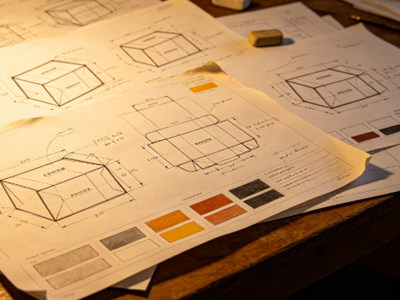
There are many reasons for process deviations, including printing registration errors, paper expansion and contraction, die-cutting errors, and equipment precision limitations. Therefore, this is not an entirely avoidable “mistake,” but rather a problem that needs to be anticipated and mitigated during the design phase. If designers ignore this and place key elements in high-risk areas, misalignment, offset, or even visual inconsistencies can easily occur in the finished product. Therefore, rationally planning process positions and reserving safety margins during the design phase is crucial for ensuring the final effect. Through scientific design and standardized operations, the impact of deviations can be minimized, allowing the packaging to maintain good visual appeal and structural stability during actual production.
Practical Methods to Prevent Process Deviations
· Leave Safety Margins
All important processes (such as hot stamping logos and UV patterns) should be kept away from cutting lines and fold lines. It is generally recommended to leave at least 3-5mm of safety margin to avoid visual impact due to deviations.
· Avoid Overly Symmetrical Designs
Symmetrical designs require extremely high precision; any deviation will be very noticeable. Appropriately using asymmetrical layouts can reduce the sensitivity to visual errors.
· Rationally Distribute Process Areas
Do not concentrate multiple processes in the same small area; they should be appropriately dispersed to reduce the impact of overlapping errors.
· Use Reference Lines for Positioning
Add auxiliary reference lines to the design file to help accurately position process areas and facilitate the printing plant’s understanding of the design intent.
· Integrate Design with Die-Cutting Structure
Process positions should be planned in conjunction with the die-cutting diagram, avoiding proximity to fold lines, pressure lines, or gluing areas to prevent offset during processing.
· Consider Material and Process Characteristics
Different materials (such as coated paper and corrugated paper) will deform to varying degrees during processing. The design should be adjusted according to the material characteristics.
· Confirm the Effect with Proofing
Proofing before formal production allows for the early detection of deviations and timely design adjustments.
The Difference Between Avoiding and Ignoring Deviations
If process deviations are fully considered during the design phase and reasonable measures are taken to avoid them, even minor errors during production will not affect the overall visual effect. For example, a slight offset in logo position can still maintain aesthetics and harmony due to the safety margin. However, if these issues are ignored and key elements are placed close to the cutting line or center of symmetry, any deviation will be very noticeable. For example, a misaligned hot stamping logo or UV pattern will directly affect the product’s quality and create an unprofessional impression on consumers. The comparison shows that avoiding deviations in advance not only improves packaging quality but also reduces rework and losses, making it a crucial and indispensable part of the design process.
Frequently Asked Questions
Q: Can process deviations be completely avoided?
A: It’s impossible to completely avoid deviations, but their impact can be mitigated through design, ensuring the overall effect remains unaffected.
Q: Must the safety margin be uniform?
A: It can be adjusted based on the process and product type, but it’s recommended to keep it within 3-5mm to ensure safety.
Q: Why are symmetrical designs prone to problems?
A: Symmetrical designs have very strict positional requirements; any slight deviation will be magnified, affecting visual balance.
Q: Is prototyping really necessary?
A: Absolutely necessary. Prototyping allows for early detection of problems and is a crucial step in avoiding large-scale errors.
Process positional deviations are an unavoidable part of packaging design and production, but their impact can be minimized through scientific design and reasonable planning. Reserving safety margins, optimizing layout, incorporating die-cutting structures, and considering material properties during the design phase are all effective mitigation methods. Designers need to consider the production perspective, not just the visual effect. Only by combining design with the process can the final product be both aesthetically pleasing and stable. Furthermore, prototyping and repeated checks can further verify the feasibility of the design and reduce risks. Furthermore, standardized design processes and meticulous operational habits can help the team improve efficiency and reduce error rates. Optimizing every detail ensures final quality. Deviations in process placement are not inherently problematic; the key is whether they are anticipated and addressed proactively. Through proper design and meticulous execution, packaging can maintain a good visual appearance during actual production, thereby enhancing the overall product image and market competitiveness.

