
How to choose box thickness for custom packaging?

When customers ask me whether their custom packaging box should use 300g or 400g paperboard, I usually do not give them a number right away. Thicker paperboard is certainly stiffer, but that does not automatically mean the box will be more durable. Product weight, box size, opening style, and shipping conditions all affect the final choice. I have seen customers specify 400g from the start, only to find that the creases cracked during sampling. Others chose thinner paperboard to save money, but the box could not support the product once packed. For custom packaging boxes, thickness is not something you can judge by the “g” number alone.
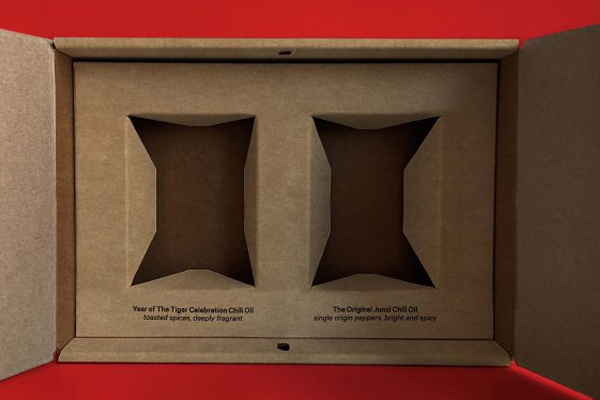
What Is the Difference Between 300g, 350g, and 400g Custom Packaging Boxes?
Many customers look at a quotation showing 300g, 350g, and 400g and assume that the higher the number, the thicker the paper. That is not always the case. GSM refers to the weight of paper per square meter. Actual physical thickness is also affected by paper density, material, and coating. Even two types of 350g paper can have different actual thicknesses.
- 300g works well for lightweight folding cartons.
When the product itself is not very heavy, 300g paperboard can meet the needs of many standard folding boxes. It is relatively easy to fold and form, and it does not necessarily feel too thin when used for small boxes.
- 350g is a specification many projects consider.
350g offers a practical balance between weight and stiffness and is commonly used for cosmetics, food, and 3C product packaging. During purchasing, I still recommend asking the manufacturer for the actual paper thickness instead of looking only at the GSM shown on the quotation.
- 400g provides more stiffness and a heavier feel.
For heavier products or packaging that needs to feel more substantial in the hand, 400g can be considered. Once the paperboard becomes thicker, however, creasing, folding, and finishing processes need to be checked again.
One set of figures makes it easy to see why GSM and thickness do not always increase at the same rate: one white-cardboard specification lists 300g at about 0.38mm, 350g at about 0.48mm, and 400g at about 0.51mm. These figures should not be applied to every type of paper, since the actual specification depends on the material.
What Should You Consider When Choosing Box Thickness? Don’t Just Look at GSM
I have worked with plenty of customers who start by saying, “Make it 350g.” It sounds specific, but several important details are still missing. A packaging manufacturer needs to know how heavy the product is, how large the box will be, and whether the finished package will sit on a retail shelf or go through parcel delivery.
- Product weight matters. A lightweight product and a glass bottle can put completely different pressure on the box bottom, side panels, and locking points.
- Box size matters too. A 350g board may feel quite rigid in a small carton. Once the box becomes larger, the wider panels can change the overall stiffness and feel.
- The box structure changes how pressure is distributed. Folding cartons, drawer boxes, rigid-lid boxes, and window boxes place stress on different areas of the board.
- Shipping conditions need to be clear from the beginning. Retail shelf packaging and parcel shipping have very different requirements. Long-distance shipping may require attention to corrugated structure, compression resistance, and internal cushioning. Common E-flute corrugated board is about 1.5mm, while B-flute is about 3.0mm.
My usual approach is to start with the product weight and box dimensions, then work backward to the appropriate paperboard specification. This is much more useful than simply asking, “How many grams do you want?”
How Should You Choose Thickness for Different Packaging Boxes? This Table Makes It Clearer
If you focus only on the paperboard number, it is easy to keep choosing thicker material. In actual purchasing, I prefer to look at the box structure, product weight, and intended use together. The specifications below can be used as a starting point for discussion, while final production should still be confirmed through sampling.
| Packaging Type | Common Reference Specification | Key Things to Check |
| Small folding carton | 250–300g | Product weight, folding performance, printing |
| Standard retail carton | 300–350g | Stiffness, size, forming performance |
| Cosmetic/gift carton | 350–400g | Hand feel, structure, surface finishing |
| Premium rigid box | Greyboard about 1.0–3.0mm | Box structure, size, load-bearing capacity |
| E-commerce shipping box | E-flute about 1.5mm and up | Compression, shipping, internal protection |
| Heavier shipping packaging | B-flute about 3.0mm and up | Stacking, compression, product weight |
These specifications can vary with paper grade, density, and processing methods. A single GSM figure cannot determine the final box thickness or strength.
Can a Custom Packaging Box Be Too Thick and Become Less Practical?
Yes. Thicker paperboard is not always better, and this becomes especially obvious during sampling. Increasing thickness can make a box feel more rigid, but it can also affect creasing, folding, and gluing. If the box structure itself is not designed properly, simply changing from 350g to 400g or even thicker board may not solve deformation problems. Box structure, creasing, grain direction, board stiffness, and load distribution all affect how the finished box performs.
During sampling, I usually ask customers to check these areas:
- Do the creases show whitening or cracking? Thicker paperboard requires better control at the crease lines. A flat unfolded sheet does not tell the whole story.
- Can the box bottom support the product? For heavier products, a weak bottom structure can still collapse even when thicker board is used.
- Does the box open and close smoothly? For drawer boxes and rigid-lid boxes, excessive board thickness can cause problems if the assembly clearance is too tight.
- Is the gluing position suitable? Thicker board changes the folded dimensions and contact surfaces, so the glue area may need to be adjusted.
- Does the finished box deform after shipping? A sample can look perfect at the factory and still change shape after packing and stacking. The actual loading and shipping conditions should be tested.
I have seen a typical situation where a customer worried that the box was not rigid enough and asked to increase the board thickness directly. The sample became harder to fold, and the corners were more difficult to handle. After adjusting the load-bearing areas of the box structure and selecting a more suitable board, the result was much more stable.
For custom packaging boxes, the real goal is to choose the right thickness, not simply the thickest option. Large boxes, heavier products, and packages that need long-distance shipping deserve extra sampling. Test the actual packing, opening, stacking, and shipping conditions before moving into mass production.
When choosing thickness for custom packaging boxes, 300g, 350g, and 400g can all be suitable depending on the project. The right choice depends on product weight, box dimensions, structure, and usage conditions. GSM is only one material parameter; actual thickness, board stiffness, and forming performance matter too. When requesting a quotation, it is better to provide the product dimensions, weight, and box structure together. That makes it easier for the packaging manufacturer to recommend a suitable specification and helps avoid the common assumption that thicker paperboard is always better.

