
How to Design Packaging Box Liners?

In packaging box design, many people often focus on the appearance while neglecting the importance of the lining. In fact, the lining not only serves to secure the product and prevent damage, but also directly affects the user’s unboxing experience and the overall sense of quality. A well-designed lining can make the product more stable in the packaging, while also enhancing its visual and tactile appeal, allowing consumers to feel the brand’s care the moment they open the package.
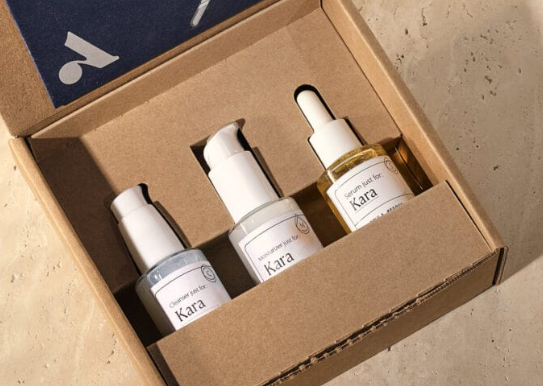
As consumers’ demands for experience increase, lining design has gradually evolved from a simple “protective function” to a comprehensive design that combines “function + aesthetics + brand expression.” Especially in the fields of gifts, electronics, and cosmetics, the lining must not only precisely fit the product shape but also consider the display effect. For example, whether the product is neatly arranged, easy to remove, and has a sense of ceremony when the consumer opens the package are all closely related to the lining design. Furthermore, lining design involves multiple aspects such as material selection, structural methods, cost control, and environmental protection requirements. An unreasonable design may lead to product movement, damage during transportation, and even damage to the brand image.
Safety First
The most basic function of the lining is to protect the product. The design must consider the product’s weight, shape, and fragility to ensure the inner liner can securely hold the product and prevent collisions or movement during transport.
For example:
· Glassware requires materials with strong cushioning.
· Electronic products require shockproof design.
· Small parts require compartmentalized structures to prevent clutter.
Safety is the primary principle in inner liner design.
Precise Size Fit
The inner liner must perfectly match the product’s dimensions. If the space is too large, the product will wobble; if it’s too small, it may cause difficulty in handling or deformation. Therefore, precise design based on product dimensions is necessary. Common practices include: leaving appropriate gaps for easy removal; creating grooves or custom shapes according to the product’s contours; and rationally organizing multiple products into sections. A perfect size fit improves stability and user experience.
Appropriate Material Selection
Different materials offer different effects. The inner liner material not only affects protective performance but also the overall texture and cost. Selection must consider both product positioning and budget.
Common materials include:
EVA: Soft and elastic, suitable for high-end products
Sponge: Good cushioning, moderate cost
Molded pulp: Environmentally friendly and low cost
Blister forming: Precise molding, suitable for mass production
Material selection should balance protection, appearance, and cost.
Clear Structural Design
The inner lining structure needs to be simple and practical. Complex structures, while seemingly sophisticated, can increase costs and production difficulty. A reasonable structure should facilitate production and assembly while ensuring functionality.
For example:
· Single-layer slotted structures are suitable for simple products
· Multi-layer structures are suitable for modular products
· Removable linings increase flexibility
A clear structure helps improve efficiency and stability.
Easy to Retrieve
User experience is an important part of the lining design. If the product is difficult to remove, it will reduce the user experience. Therefore, the method of retrieval needs to be considered in the design.
Common methods:
· Add finger positions or grooves
· Set up pull straps to assist in retrieval
· Design an angled design for easy retrieval
Easy retrieval can improve user satisfaction.
Optimized Display Effect
The lining is not only a protective tool but also a display medium. The way products are displayed upon unboxing directly impacts the visual effect. A well-designed layout can enhance a sense of luxury and ceremony.
For example:
· Symmetrical arrangement improves neatness.
· Centered placement highlights the main product.
· Using color contrast enhances visual hierarchy.
A good display can improve brand image.
Color Coordination with Outer Box
The inner lining color should be consistent with or reasonably contrast with the outer packaging. Inappropriate color matching will affect the overall aesthetics. Harmonious colors enhance brand consistency.
For example:
· Bright packaging paired with light-colored inner linings.
· Brand colors extend to the inner lining design.
Color unity enhances the overall visual effect.
Cost Control
The inner lining design also needs to consider cost. Overly complex designs or the use of high-end materials will significantly increase packaging costs. Therefore, reasonable cost control is necessary based on product positioning.
Specific methods:
· Simplify structural design.
· Choose cost-effective materials.
· Mass production reduces unit price.
Cost control is an important part of commercial design.
Environmental Factors
Environmental requirements are receiving increasing attention. When designing inner linings, recyclable or biodegradable materials should be chosen whenever possible to reduce environmental impact.
Practical practices include:
· Using paper or pulp materials instead of plastic
· Reducing the use of multiple materials
· Optimizing structure to reduce waste. Eco-friendly design not only aligns with trends but also helps enhance brand image.
Packaging inner lining design is a crucial aspect that balances functionality and aesthetics. It not only relates to product safety during transportation but also directly impacts the consumer’s unboxing experience. From protective performance, size fit, and material selection, to structural design, access methods, display effects, color matching, cost control, and environmental requirements, every factor needs comprehensive consideration. Only by achieving a balance in these areas can a practical and high-quality inner lining solution be designed. Inner linings often require continuous optimization through prototyping and testing. For example, whether the product is placed stably, whether it is easy to remove, and whether it shifts during transportation all require repeated verification. Through these meticulous adjustments, the inner lining can be ensured to perform optimally in actual use. Excellent inner lining design not only enhances product protection but also strengthens the brand experience, allowing consumers to feel quality and care the moment they open the packaging. Packaging is not just about the external appearance; the internal structure is equally important, and the lining is the key part that connects function and experience.

