
How to Design Packaging Boxes for Multiple Products?

Packing several products into one box may seem simple, but the sampling stage can reveal unexpected problems. Bottles may have different heights, small accessories may lack secure positions, and unused space can allow products to collide during shipping. These issues are common with cosmetic sets, coffee gift boxes, electronic accessories, and corporate gifts. When designing custom packaging boxes, don’t rush to determine the outer box dimensions. Plan how the products will be arranged, how the inserts will hold them, and how users will remove them. This makes it easier to select suitable dimensions and materials.
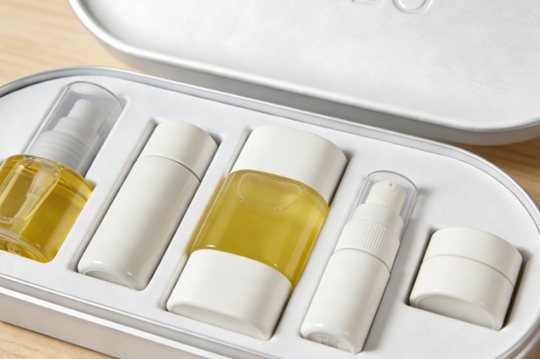
How Should Multiple Products Be Arranged in One Packaging Box? 4 Common Layouts
The arrangement of products inside a box directly affects presentation, insert design, and packing efficiency. Before finalizing the structure, classify the products by size, weight, and usage sequence, then determine where each item should go.
- A clear visual hierarchy: Suitable for gift sets and cosmetic collections. Place the main product in a prominent position and arrange accessories around it so the entire set is easy to see when the box opens.
- Side-by-side placement: Ideal for products of similar sizes, such as lipsticks, tea sachets, and small food boxes. Continuous slots can simplify packing.
- Layered arrangements: Useful for sets containing many items when the box has sufficient height. Check that the upper layer does not press against the products below.
- Individual compartments: Suitable for glass bottles, electronic accessories, and gifts in different sizes. Giving each product its own space helps prevent collisions.
One detail is easy to overlook: products should not simply be able to fit inside the box. If the slots are too tight, removing the products becomes difficult. If there is too much empty space, items may shift during transportation.
Which Inserts Are Best for Multi-Product Packaging Boxes? Paperboard, Foam, or Corrugated Dividers?
Packaging inserts need to secure products while keeping costs and the unboxing experience in mind. Different product combinations require different materials. The right choice depends on product weight, shape, and potential impacts during shipping, rather than simply choosing the thickest or softest material.
| Insert Type | Suitable Products | Main Function | Key Design Considerations |
| Paperboard inserts | Cosmetics, food products, lightweight gifts | Organize, position, and display products | Slot dimensions, fold lines, and support points |
| Corrugated dividers | Multi-bottle packs, canned products, shipping sets | Separate products and reduce collisions | Compartment dimensions and divider stability |
| EVA or foam inserts | Glass products, electronics, precision components | Cushion impacts and secure products precisely | Cavity shape, density, and removal space |
Paperboard inserts are worth testing for lightweight products, while corrugated dividers work well for multi-bottle packs. EVA or foam can be considered when products require more precise positioning. If the packaging is intended to use primarily paper-based materials, start by testing paperboard slots and add other materials only when the protection requirements justify them.
How to Calculate Custom Packaging Box Dimensions: Design the Insert and Outer Box Together
Outer box dimensions cannot be calculated simply by adding the length, width, and height of every product. Divider thickness, insert walls, gaps between items, and the space needed for removal all affect the available interior space. A practical approach is to measure every product, including its weight, map out the proposed arrangement, and then calculate the insert and outer box dimensions.
Include protruding parts such as bottle caps, pump heads, and protective film when measuring. If a product range includes different sizes, test both the largest and smallest versions in a sample box. This helps prevent larger items from being too difficult to fit and smaller items from being inadequately secured.
Also check that the lid closes without pressing against the products and that the insert does not deform because of insufficient space. Dimensions that look correct on a drawing do not always translate into a smooth assembly process, so physical sampling remains essential.
What Should You Test When Sampling Multi-Product Packaging Boxes to Reduce Shipping Damage?
Sampling should involve more than checking whether the open box looks neat. Simulate actual packing and removal, then check how the compartments work together. The more products a box contains, the more important it becomes to verify every slot and divider, because one poorly designed position can affect the entire set.
- Check product stability: Close the box and gently shake it to see whether products slide, tilt, or collide with neighboring items.
- Test repeated packing and removal: Insert and remove the products several times to make sure the slots do not scratch their surfaces or pull the insert out with them.
- Check lid closure: Make sure bottle caps and accessories do not interfere with the lid and that the insert allows the box to close properly.
- Simulate shipping conditions: For fragile or heavier products, consider suitable drop, vibration, and stacking tests to assess the combined protection provided by the outer box and insert.
If products still move during testing, adjust the slot positions, insert shape, or product arrangement before adding more cushioning. This helps identify the actual cause of the problem and avoids unnecessary spending on extra filler.
When designing custom packaging boxes for multiple products, start with the product list and layout, then develop the inserts and calculate the outer box dimensions. Testing stability and ease of removal during sampling can help reduce production rework. INS PACKAGING provides custom packaging structure design, insert development, sampling, and mass production services, with solutions tailored to product dimensions, weight, and intended use.

