
How to handle mixed Chinese and English layouts in packaging design

In contemporary packaging design, mixed Chinese and English layout has become very common, especially for products targeting the international market or emphasizing brand identity. Chinese and English differ significantly in font structure, stroke density, and reading habits. If not handled properly, this can easily lead to visual disharmony, hierarchical confusion, and even negatively impact the reading experience. Chinese characters are typically more square and complex in strokes, while English is simpler and has a linear structure. If this difference is not handled appropriately, it can result in inconsistent visual rhythm. For example, Chinese may appear heavy while English appears light, or the two may be mismatched in size and spacing, thus disrupting the overall balance. Therefore, designers need to unify font selection, proportion adjustments, and layout rules to ensure a harmonious relationship between the two languages within the same visual space. Consistency is not merely visual consistency but also an integral part of brand expression. An excellent mixed Chinese and English layout design can make information delivery clearer while enhancing the professionalism and international image of the packaging.
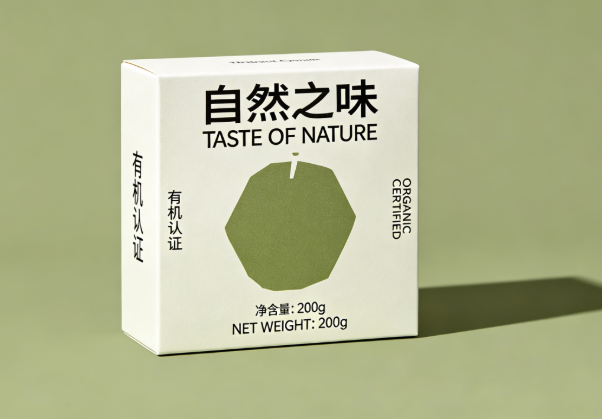
Key Methods for Maintaining Consistency in Mixed Chinese and English Layout
• Principle of Unified Font Style
Choosing Chinese and English fonts with similar styles is fundamental. For example, when using a simple sans-serif font for Chinese, a similar style of sans-serif font should be chosen for English to avoid disharmony caused by one being complex and the other simple.
· Font Size Proportion Harmony Principle
Due to the higher visual density of Chinese characters, English characters often require slightly larger fonts or adjusted weights to achieve visual balance. The same font size should not be used directly; adjustments should be made based on visual effect.
· Font Weight and Line Weight Consistency Principle
Chinese and English characters should maintain a similar weight. For example, when using a medium weight for Chinese characters, a similar weight should be chosen for English characters to avoid a visually disparate effect.
· Unified Line Spacing and Character Spacing Principle
When mixing text, line spacing and character spacing should be consistent to make the overall layout neater. The spacing between English words and Chinese characters needs to be coordinated to avoid rhythmic breaks.
· Consistent Alignment Principle
Chinese and English characters should follow the same alignment method, such as consistent left alignment or center alignment. This enhances the overall sense of order and makes the layout more stable.
· Clear Information Hierarchy Principle
In mixed text, the primary and secondary information relationships need to be clearly defined. For example, when Chinese is the primary information and English serves as supplementary explanation, the font size and placement should reflect this hierarchical relationship.
Visual Differences Between Unified and Chaotic Layouts
When Chinese and English are properly mixed, the overall layout presents a clear, balanced, and rhythmic visual effect. Although the two languages differ in form, they form a unified visual system, preventing consumers from feeling abrupt or experiencing difficulty in reading. This design not only enhances the reading experience but also strengthens the brand’s international image. However, a lack of unified rules, such as inconsistent font styles, unbalanced font sizes, or chaotic alignment, leads to visual fragmentation. Chinese and English appear independent, failing to form a cohesive whole and even giving consumers an unprofessional impression. This is particularly evident in high-end packaging, directly impacting the perceived brand value.
Frequently Asked Questions
Q: Must Chinese and English use the same font family?
A: Not necessarily, but the styles must be similar to ensure visual unity.
Q: Why does English sometimes need to be enlarged?
A: Because English has a simpler structure, it needs to be enlarged to match the visual weight of Chinese.
Q: Can multiple fonts be used when mixing layouts? A: Yes, but the quantity should be controlled, and the overall style should be consistent.
Q: How can I quickly determine if the mixed layout is harmonious?
A: You can zoom out to view the overall effect, or observe from a distance to see if there is any visual imbalance.
The key to mixed Chinese and English layout is “unity without uniformity.” Designers need to establish unified rules in font style, font size ratio, font weight, and layout structure to make the two languages visually cohesive. At the same time, clear information hierarchy and consistent alignment can make the layout more orderly and readable. The reading experience should always be the core, ensuring clear information delivery while also considering visual aesthetics. Through careful adjustments and repeated testing, the most suitable balance can be found, allowing Chinese and English to maintain their individual characteristics while blending seamlessly. Furthermore, consistency not only improves visual quality but also reflects brand professionalism. A standardized mixed layout design can enhance consumer trust and elevate the overall packaging quality. Mixed Chinese and English layout is not a simple combination but a design approach that requires meticulous control. Only by establishing rules based on understanding the differences can true unity be achieved, allowing the packaging to achieve the ideal effect in both visual appeal and information expression.

