
How to reduce parcel box shipping costs?

Many e-commerce sellers face the same problem: the product itself is lightweight, but shipping costs are still surprisingly high. Sometimes, the problem is not the carrier rate but the packaging. An oversized box increases dimensional weight, while excessive filler adds material costs. A box that is too small can cause products to get squeezed or damaged. The right Package Drop Box needs to balance size, weight, protection, and shipping efficiency. When these details are handled properly, even small savings per package can add up over time.
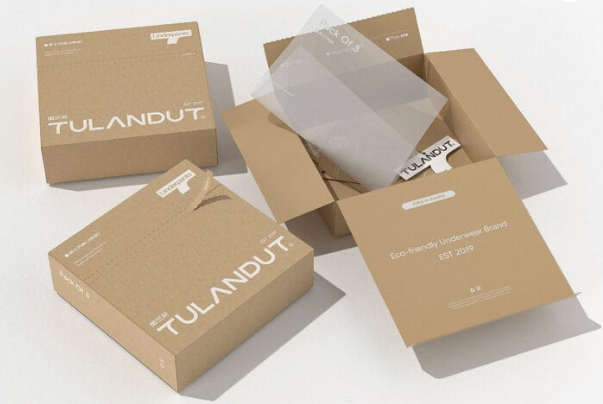
How Can You Choose the Right Package Drop Box Size to Reduce Shipping Costs?
Box size has a direct impact on shipping volume. Many sellers use larger boxes as a safety measure, but this often leaves products moving around inside the package and requires more filler material. When choosing packaging, it is better to start with product dimensions and shipping volume.
- Keep the box close to the product size
Products need reasonable cushioning space, but there is no need to leave large empty areas around them. Industry data shows that unused packaging space can reach 18%–64% for some products. This extra space does not improve product value but can increase shipping volume.
- Create dedicated boxes for high-volume products
If a product receives a large number of orders every day, developing a dedicated Package Drop Box can be worthwhile. Using a properly sized box over the long term is often more efficient than putting every product into one oversized box.
- Prepare several common sizes
E-commerce orders can vary from one order to another. One box size rarely works well for every product. Keeping several commonly used sizes can reduce unnecessary empty space.
- Measure the box after sealing
When purchasing packaging, do not focus only on the internal box dimensions. The final external dimensions after packing and sealing are important during shipping, so the finished length, width, and height should be recorded.
A difference of just a few centimeters may seem minor, but length, width, and height all affect dimensional calculations. With a large number of shipments, those small differences can turn into significant costs.
How Can You Reduce Dimensional Weight and Shipping Costs?
Dimensional weight is especially important for lightweight e-commerce products. Some shipping services use 139 as the DIM divisor. The package dimensions are used in the calculation and then compared with the actual weight. The higher value may become the billable weight.
- Check dimensional weight first
A product weighing only 2 lb packed in a 16 × 12 × 10-inch box can have a dimensional weight of about 14 lb when calculated using 139. The product may weigh very little, but the billable weight can be much higher.
- Reduce unnecessary filler
Filler materials are meant to protect products, not to fill oversized boxes. When the box already fits the product properly, materials such as bubble wrap and paper filler can often be reduced.
- Test different product arrangements
The same number of products can require very different box dimensions depending on whether they are placed horizontally, vertically, or in an interlocking arrangement. Packaging design should include actual packing tests.
- Do not make the box too small just to save on shipping
Reducing box dimensions can lower dimensional weight, but it also reduces protection space. If products are damaged during shipping, replacement orders, returns, and customer service can create additional costs.
Reducing shipping costs is not simply about making the box smaller. The goal is to make sure the available space is used where it actually protects the product.
How Should Different Products Choose a Package Drop Box to Reduce Shipping Costs?
Different e-commerce products have different packaging requirements. Clothing, beauty products, food, electronics, and fragile items need different levels of protection. Box size should be chosen based on the product itself, the number of items per shipment, cushioning requirements, and the risk of movement during transportation.
| Product Type | Common Packaging Problem | Recommended Packaging Approach | Cost Control Priority |
| Clothing and fabric products | Products are soft and can become compressed or wrinkled | Use lightweight packaging that fits the product | Reduce unnecessary box space |
| Beauty and skincare products | Bottles and containers can move inside the box | Add inserts or fixing structures | Reduce unnecessary filler |
| Food and snacks | Multiple products are often packed together | Use a properly sized corrugated mailer box | Optimize product arrangement |
| Electronics | Sensitive to impact and compression | Use stronger board with cushioning | Protect key areas without excessive thickness |
| Glass bottles and ceramics | Products can hit each other during shipping | Use dividers or individual compartments | Control product movement |
| Subscription boxes and gift sets | Order combinations can vary | Design a box that accommodates several combinations | Reduce repeated box development |
When ordering a Package Drop Box, it helps to provide the packaging supplier with the product dimensions, weight, quantity per box, and internal protection requirements at the same time. This makes it easier to develop a box that fits real shipping conditions and keeps transportation costs under control.
What Other Details Are Easy to Miss When Reducing Package Drop Box Shipping Costs?
- Do not compare box prices alone: A cheaper oversized box can increase dimensional weight and ultimately result in higher shipping costs.
- Do not focus only on board thickness: For lightweight products, proper sizing and stable internal protection are often more practical than simply using thicker board.
- Always test physical samples: Pack the actual product, seal the box, and check for movement or compression after handling. A digital design cannot fully replace physical testing.
- Optimize high-volume SKUs first: There is no need to redesign every package at once. Start with products that generate the most orders so the impact on shipping costs is easier to measure.
- Do not overlook packaging material waste: An unsuitable Package Drop Box can increase filler, board usage, and shipping volume at the same time. Any savings on the box itself can quickly disappear through other costs.
Reducing package shipping costs does not always mean finding a cheaper carrier. In many cases, it starts with designing a more efficient Package Drop Box. For lightweight products, check dimensional weight first. For products that move inside the box, improve internal protection. For high-volume products, consider dedicated box sizes. Less empty space and better product stability can make a noticeable difference when thousands of packages are shipped over time.

