
Is drawer-style packaging design expensive? How can it be controlled?

In the packaging design field, drawer-style packaging (also known as pull-out box packaging) is increasingly favored by brands due to its unique structure and superior user experience. Compared to ordinary top-and-bottom or folding boxes, this type of packaging, through its “inner box + outer box” combination, creates a sense of “ritual” for consumers when opening it, and is therefore often used for mid-to-high-end products such as gifts, cosmetics, and electronic products. Many companies, when considering whether to adopt this structure, are most concerned about: Is the cost high? Is it worth the investment?
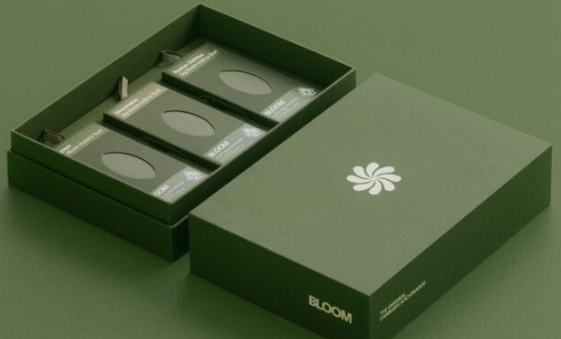
While drawer-style packaging is indeed generally more expensive than ordinary packaging, this is mainly due to its complex structure, large material usage, and high manufacturing process requirements. However, this does not mean it is uncontrollable. With proper planning in the initial design stage, focusing on structural optimization, material selection, and process control, it is entirely possible to effectively reduce costs while maintaining quality. Furthermore, cost is not absolute; it is also closely related to factors such as order quantity, printing method, and brand positioning. Some brands have optimized their designs to ensure that drawer-style packaging maintains a premium feel without significantly increasing the budget.
Packaging Cost Breakdown
Drawer-style packaging is expensive, primarily due to its structure. This type of packaging typically consists of an outer box and an inner drawer, doubling the structure of a standard single-layer cardboard box, directly increasing material usage. Furthermore, the precise fit between the inner and outer boxes requires higher dimensional accuracy, further increasing production difficulty.
For example:
· A standard folding box requires only one unfolded cardboard sheet.
· Drawer-style packaging requires two independent structures.
· Adding ribbons or handles further increases costs.
Therefore, from a structural perspective, its base cost is naturally higher.
Material Selection Impact
Materials are a crucial factor determining cost. Drawer-style packaging commonly uses thicker grey board or cardboard to ensure structural strength and a comfortable feel. Adding high-end materials such as specialty paper or art paper significantly increases costs.
For example:
· Using ordinary white cardboard: lower cost, but average texture.
· Using specialty paper (such as tactile paper): improved feel, but double the price.
· Increasing the thickness of grey board: the box is more sturdy, but material costs increase.Choosing materials wisely can find a balance between visual appeal and cost.
Process Complexity
The more complex the process, the higher the cost; this is a basic rule in the packaging industry.
Drawer-style packaging often uses multiple processes to enhance its perceived quality, such as hot stamping, embossing, and UV coating. While these processes enhance the visual appeal, they also increase processing costs and production time.
Common situations include:
· Single-color printing: controllable cost.
· Multi-color printing + hot stamping: significantly increased cost.
· Multiple processes stacked: suitable for high-end products, but the most expensive.
If the budget is limited, unnecessary process stacking should be reduced.
Production Quantity Factors
Order quantity has a significant impact on the cost of a single package. In packaging production, there are “minimum order quantity” and “economies of scale.” The larger the quantity, the lower the unit price; the smaller the quantity, the higher the unit price. Drawer-style packaging, due to its complex manufacturing process, sees its costs amplified during small-batch production.
For example:
100 orders: Higher unit price
1000 orders: Significantly lower unit price
10000 orders: Costs tend to stabilize
Therefore, rationally planning production quantities is a crucial means of cost control.
How to Reduce Structural Costs?
Optimizing the structure is the most direct way to reduce costs. During design, unnecessary complex structures can be reduced, such as avoiding excessive stacking or special mechanism designs. Simplifying the structure not only reduces material usage but also improves production efficiency.
Specific practices include:
· Reducing the number of inner lining layers
· Rationally controlling box dimensions to avoid wasting space
· Using standardized specifications for easy mass production
The simpler the structure, the easier it is to control costs and it also facilitates transportation and storage.
Selecting More Cost-Effective Materials
While ensuring quality, materials can be appropriately optimized. For example, more cost-effective alternative materials can be chosen instead of blindly pursuing high-end materials. In many cases, a high-end feel can also be achieved through design and printing effects.
Optimization methods include:
· Replacing expensive specialty paper with high-quality printing
· Reducing gray board thickness while maintaining structural stability
· Choosing local material suppliers to reduce transportation costs
Material optimization does not mean reducing quality, but rather improving cost-effectiveness.
Process Control Methods
Controlling the number of processes is a crucial strategy for cost reduction. During the design phase, it should be clearly defined which processes are “essential” and which are “optional.” Avoid blindly adding processes for visual effect.
For example:
Retain core processes (such as logo hot stamping)
Eliminate large-area complex processes
Replace some decorative effects with design layout
Good visual effects can also be achieved through a “less is more” approach to process design.
Supply Chain and Prototyping Optimization
Choosing suitable suppliers and optimizing the prototyping process can also effectively reduce costs. Different manufacturers have significantly different prices; choosing experienced manufacturers with advanced equipment can reduce production errors and rework costs. At the same time, reducing the number of repeated prototyping attempts also saves money.
In practice, you can:
Compare quotes from multiple suppliers
Confirm the design plan in one go to reduce modifications
Communicate process details in advance to avoid later adjustments
Good supply chain management is a key aspect of controlling overall costs.
While drawer-style packaging design is indeed relatively expensive, this “high cost” is built on a better user experience and stronger brand expression. It’s not just a packaging format, but also an important means of enhancing the perceived value of a product. For companies that pursue quality and brand image, this investment is often worthwhile. However, the premise is that the design must be reasonable; blindly piling on structures and processes will only increase unnecessary expenses. In practice, companies can effectively reduce the overall cost of drawer-style packaging through structural simplification, material optimization, process control, and reasonable planning of production quantities. At the same time, it’s necessary to consider the product positioning to determine if this packaging format is truly necessary. If the product is positioned as mid-to-high-end, drawer-style packaging can enhance competitiveness; however, for fast-moving consumer goods or low-priced products, a more cautious approach is required.

