
Knowledge of Baking Food Packaging Box Printing and Food Safety Requirements

Baking food packaging boxes not only protect the product but also serve as a means of brand promotion and consumer experience. Printing knowledge and food safety requirements are inseparable during the production process. Reasonable selection of packaging materials, printing processes, and surface treatments can not only ensure food safety but also enhance brand value and product quality.
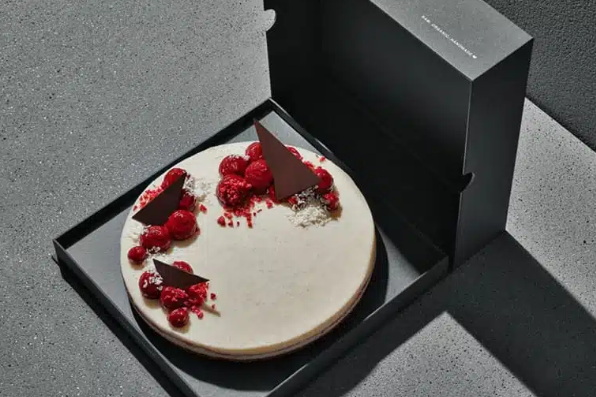
Packaging Material Selection
The packaging box material has a significant impact on food safety and printing results. Baked goods often contain oil and moisture, so packaging materials need to be oil-proof, moisture-proof, and heat-resistant. Commonly used materials include:
- Food-grade white cardboard: High flatness, accurate color reproduction, suitable for high-end baked goods such as cakes and cookies.
- Corrugated paper: Strong load-bearing capacity, suitable for transport packaging, but requires food-grade coating treatment.
- Transparent PET or PVC: Convenient for product display, but the material must be safe and non-toxic.
Material selection must meet food contact safety standards, while also considering the adhesion of printing inks and the durability of the finished product.
Food Safety Requirements
Baking food packaging must strictly comply with food safety regulations. For packaging boxes that come into direct contact with food, the materials and inks must be non-toxic and free of migrating chemicals. Common requirements include:
- Packaging materials must meet food safety certifications, such as FDA or EU food contact standards.
- Inks must be food-safe to prevent pigment migration.
- Surface coatings or films must be free of harmful substances and ensure oil and water resistance.
Food safety requirements not only affect production compliance but also consumer health and brand reputation.
Printing Process and Color Control
Printing processes directly affect the visual effect and brand image of baked goods packaging boxes. Commonly used processes include offset printing, gravure printing, hot stamping, and spot UV coating. During printing, attention must be paid to color reproduction to ensure that the logo and patterns accurately reflect the brand characteristics.
- Offset printing: Suitable for large areas of color blocks, stable colors, suitable for mass production.
- Gravure printing: High color saturation, capable of presenting intricate patterns.
- Spot UV coating or hot stamping: Highlights the brand logo and design elements, enhancing the packaging’s quality.
A reasonable combination of printing processes can enhance visual impact while ensuring safe inks and food contact standards.
Proofing and Mass Production Control
Proofing is a crucial step in ensuring consistent printing quality and color. It allows for the identification of color deviations, process inconsistencies, and material compatibility issues. During mass production, consistent materials and inks must be maintained, printing parameters controlled, and each batch of packaging boxes ensures compliance with food safety standards and design requirements. Furthermore, packaging size and structural design affect transportation safety and product integrity. Box strength, folding methods, and load-bearing capacity all need to be verified before production to prevent damage to baked goods during transport.
Surface Treatment and Functionality
Baked goods packaging boxes commonly undergo lamination, matte lamination, or glossy lamination to improve oil resistance, water resistance, and abrasion resistance. Surface treatment not only protects the printed design but also extends the product’s shelf life. Appropriate surface treatment selection helps improve the packaging’s texture and feel while maintaining food safety.
Knowledge of printing baked goods packaging boxes is closely related to food safety requirements. By appropriately selecting packaging materials, using food-safe inks and processes, strictly controlling proofing and batch production, and combining surface treatment with structural design, it is possible to create baked goods packaging boxes that are safe, durable, aesthetically pleasing, and enhance brand value. Mastering this knowledge is key to a company standing out from the competition.

