
Printing Techniques for Scented Candle Boxes

As home decorations and gifts, the design and printing of scented candle packaging directly impact the consumer’s purchasing experience. The box must not only protect the candle but also reflect the product’s quality and brand image. During the printing process, a proper combination of different printing techniques can enhance visual appeal and tactile feel, making the product more competitive in the market. Mastering paper materials, printing processes, and their combination techniques is key to improving the overall quality of scented candle boxes.
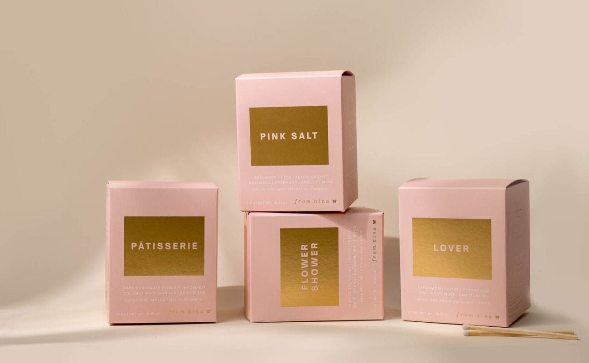
Paper and Material Selection
The paper and materials used for scented candle boxes determine the foundation of the printing effect. Commonly used papers include coated paper, white cardboard, and grey board paper, each suitable for different printing processes. Coated paper is smooth and absorbent, suitable for color printing; white cardboard is thick and sturdy, suitable for hot stamping or embossing; grey board paper is thick and rigid, often used for structural support in high-end gift boxes. Choosing the appropriate material based on the candle’s weight and box design ensures the box’s sturdiness while improving print quality.
Basic Printing Techniques
Printing techniques directly affect visual appeal and tactile experience. Common printing processes include four-color printing, spot varnishing, hot stamping, embossing, and die-cutting. Four-color printing is suitable for displaying complex patterns and gradient colors; spot varnishing can enhance the brightness or texture of local elements; hot stamping enhances the sense of luxury; embossing adds tactile depth; and die-cutting gives the box a unique structure and shape. Understanding the characteristics of each process helps in making reasonable combinations during the design stage.
Process Combination Techniques
In scented candle box printing, the reasonable combination of different processes can create rich visual effects and brand perception:
- Hot stamping + embossing: Suitable for high-end gift boxes; hot stamping patterns highlight luxury, and embossing adds a three-dimensional texture.
- Four-color printing + spot varnishing: Vibrant and lively colored patterns; spot varnishing highlights the brand logo or patterns.
- Die-cutting + hot stamping: Special window designs combined with hot stamping borders make the packaging more artistic and recognizable.
- Spot UV + embossing: Spot gloss contrasts with matte backgrounds, enhancing visual depth.
Choosing the right combination requires considering brand style, box size, and cost control.
Color and Style Matching
Color and style matching directly affects consumers’ psychological feelings:
- Light colors + minimalist design: suitable for Nordic or natural style scented candles
- Warm colors + hot stamping decoration: creates a warm and high-end feel, suitable for gift positioning
- Color gradient + partial varnish: increases visual impact, highlighting a youthful and vibrant brand
- Matte base color + bright accents: creates a low-key luxury feel while enhancing the tactile experience
Color matching should be combined with the process to ensure overall style consistency.
Cost and Feasibility
Different process combinations will significantly affect production costs. High-end hot stamping, embossing, and partial varnishing require additional molds and manual operation, resulting in relatively high costs; four-color printing and basic die-cutting can be mass-produced at lower costs. When designing, the process should be reasonably arranged according to the budget, product positioning, and order quantity to balance visual effects and cost controllability. Communicate with the printing factory in advance to understand feasibility and process limitations to avoid designs that cannot be realized in production. VI. Proofing and Quality Control
Proofing is a crucial step in ensuring printing quality before mass production. It confirms paper selection, color reproduction, processing effects, and dimensional accuracy. During proofing, key checks include color deviation, hot stamping brightness, embossing clarity, and box structure stability. Timely adjustments to address issues prevent defective products from appearing in mass production, thus improving efficiency and final product quality.
Creative Design and Brand Extension
Scented candle box printing is not just packaging; it’s a tool for brand communication. Innovative processes and unique designs allow products to stand out from the competition. Special shapes, subtle detailing, and unique color combinations all enhance consumer appeal and memorability. Packaging design complements brand positioning, conveying product quality and strengthening brand recognition and market competitiveness.

