
What is the core concept of pet product packaging design?

With the rapid development of the pet economy, pet products have gradually shifted from single-function consumption to emotional consumption, and packaging design has changed significantly accordingly. Today, pets are no longer just animals, but are considered family members and even “emotional companions.” This means that pet product packaging must not only meet basic protection and information delivery functions, but also carry emotional expression and brand value. Against this backdrop, the core concept of pet product packaging design has gradually formed, revolving around the “human-pet relationship.” It must consider both the pet’s actual needs and meet the aesthetic and psychological expectations of the pet owner. In other words, the true audience of the packaging is “people,” but ultimately it serves “pets.” Therefore, the design needs to find a balance between cuteness, trustworthiness, and professionalism. At the same time, as consumers place greater emphasis on health, safety, and environmental protection, the packaging also needs to reflect the product’s quality and sense of responsibility.
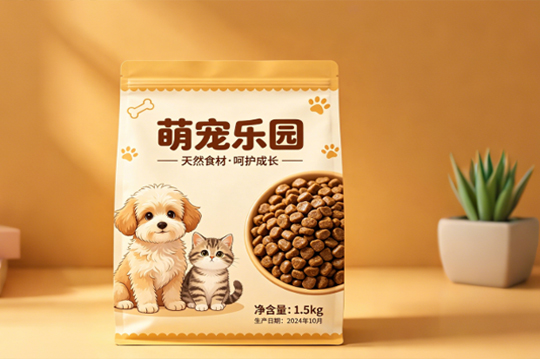
Six Design Concepts Deconstructed
• Prioritize Emotional Design
Enhance the emotional resonance with pet owners through cute illustrations, anthropomorphic characters, or warm colors, making the product feel more like a “companion.”
• Highlight Safety and Health Information
Clearly label ingredients, nutritional information, and suitable pet types to enhance consumer trust. Friendly and Natural Visual Style: Employing soft colors and natural elements to convey a healthy, additive-free brand image.
· Equal Emphasis on Functionality and Convenience
Features such as easy-tear openings, airtight designs, and moisture-proof packaging enhance the user experience.
· Personalized Brand Expression
Shaping a brand personality through a unified visual language, such as lively, comforting, or high-end professional.
· Environmental and Sustainable Concepts
Using environmentally friendly materials or reducing excessive packaging caters to modern consumer values.
Different Design Directions Between Pet Packaging and Regular Food Packaging
Compared to regular food packaging, pet product packaging exhibits significant differences in design direction. Regular food packaging focuses more on “human taste” and “visual appeal,” while pet products emphasize “pet health” and “owner trust.” Visually, food packaging often highlights realistic food images, while pet product packaging tends to use illustrations or animal images to establish an emotional connection. In terms of information, pet packaging needs to provide more detailed information on ingredients, functions, and applicable scope, as pet owners are often more cautious when choosing products. Furthermore, pet packaging emphasizes brand warmth, such as enhancing user loyalty through stories or emotional expression, while regular food packaging focuses more on quick attraction and impulse purchases. This difference illustrates that pet product packaging is not merely the outer shell of a product, but also an important tool for brands to build long-term relationships with consumers.
Frequently Asked Questions
Q: Why does pet packaging need to emphasize “emotionalization”?
A: Because the purchasing decision is made by the pet owner, and emotional factors directly influence the choice.
Q: Should packaging consider the pet’s own feelings?
A: Yes, for example, odor control and material safety all affect the pet’s experience.
Q: Are all pet products suitable for a “cute” style?
A: Not necessarily. High-end or medical products are more suited to a professional and minimalist style.
Q: Is environmentally friendly packaging important in the pet industry?
A: Very important, especially among younger consumers, where it has become a significant purchasing factor.
Specific Applications of Design Concepts
For example, some pet snack brands use cartoon pet images paired with soft colors to make the products look warm and approachable; while high-end pet food brands tend to use minimalist designs and sophisticated color schemes to highlight their professional image of “scientific formula” and “nutritional balance.” In addition, some brands detail the source of ingredients and the production process on their packaging, giving consumers greater peace of mind. In terms of functional design, some pet food packaging incorporates resealable structures for easy storage and maintaining freshness; while environmentally friendly brands use biodegradable materials or reduce plastic use to demonstrate social responsibility. These examples show that successful packaging design is often a synthesis of multiple concepts, rather than the application of a single element.
The core concept of pet product packaging design can be summarized as “pet-based, human-centered.” The design must ensure the health and safety of pets while also meeting the aesthetic and emotional needs of pet owners. In practice, a balance needs to be struck between emotional expression, information delivery, and functional experience, while also differentiating the design based on brand positioning. Whether it’s a cute style or a professional approach, the essence is to build trust and enhance the user experience.

