
What special requirements do irregular packaging boxes impose on layout design?

In the field of packaging design, irregularly shaped packaging boxes are increasingly favored by brands due to their unique structural shapes and visual appeal. Compared to traditional square or rectangular packaging, irregularly shaped boxes are more creative and recognizable in appearance, but they also place higher demands on typography design. Because of their irregular structure, the design space is often asymmetrical or contains complex variations such as curved surfaces and folds, which means that the typography must not only consider aesthetics but also structural adaptability and readability.
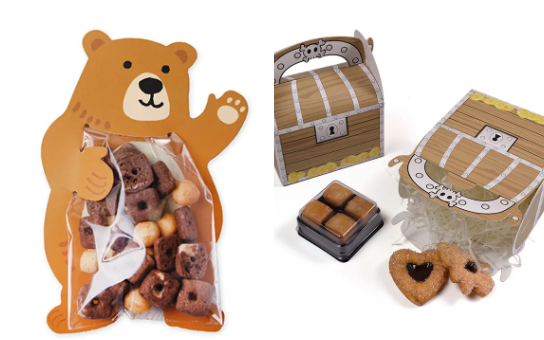
The typography of irregularly shaped packaging boxes cannot simply follow conventional layout rules. Designers need to re-plan the visual center, information distribution, and reading path based on the specific structure. For example, the visible area and key display area of round, oval, folded, or hollowed-out packaging boxes are often different, requiring the typography to have greater adaptability and flexibility. If the typography is unreasonable, it can easily lead to information being clipped, the visual center of gravity shifting, or a chaotic reading experience. Therefore, the typography design of irregularly shaped packaging boxes is not only a visual expression but also a design approach that integrates structure and information. Designers must start with the box’s structure, combining brand information and consumer reading habits to create a holistic plan that achieves visual and functional unity.
Key Design Requirements for Irregularly Shaped Packaging Box Layout
· Structure-First Layout Adaptation Principle
For irregularly shaped packaging boxes, the primary consideration should be structure, not layout. The design must revolve around the box’s shape, such as curves, folds, or window positions, ensuring that text and graphics are not folded or obscured. Layout must “design with the structure,” rather than forcibly applying a flat layout.
· Dynamically Adjusting the Visual Center Principle
Because irregularly shaped structures lack a fixed axis of symmetry, the visual center cannot be fixed on a traditional central axis. Designers need to dynamically determine the visual center of gravity based on the unfolded diagram of the box, allowing consumers to quickly grasp the core information from different angles.
· Information Distribution Zoning Principle
Irregularly shaped packaging typically has multiple visible surfaces; therefore, information should not be piled up but rather arranged in zones. For example, the front emphasizes the brand and key selling points, the sides display functional descriptions, and the back provides detailed information, making the overall reading experience more natural and fluid.
· Adaptation Principles for Curves and Irregular Boundaries
In circular or irregularly shaped outlines, text should not be placed too close to the edges. The layout direction should be adjusted according to the curves. If necessary, use curved text or segmented layout to adapt to visual flow.
· Expanded Safe Zone Principles
Due to the complexity of cutting irregular structures and the higher risk of errors, the layout must leave a larger safe zone. Important information such as logos and brand names should be far from the edges to avoid content loss due to cutting deviations.
· Readability First Principles
In complex structures, layout is prone to over-design. Regardless of the shape, readability is always the first principle. Font size, contrast, and spacing must ensure that consumers can clearly read the information in a short time.
Differences in Layout Between Traditional and Irregularly Shaped Packaging
Traditional square packaging boxes have a clear grid structure, a stable visual center, and a relatively regular information layout, making design less difficult and the layout logic easier to control. Consumers can naturally obtain information from top to bottom and from left to right. Irregularly shaped packaging boxes are completely different. Their irregular structure and unpredictable visual paths, sometimes even with multiple visual entry points, can lead to information misalignment or readability issues if traditional layout methods are used. For example, forcing a straight-line layout in circular packaging can create a sense of visual discontinuity; in a zigzag structure, ignoring structural variations can result in information being obscured by folds. This comparison shows that the layout of irregularly shaped packaging relies more on structural understanding and visual reconstruction skills than on simple graphic design techniques.
Frequently Asked Questions (FAQ)
Q: Can regular layout templates be used directly for irregularly shaped packaging?
A: It’s not recommended. Due to the unique structure of irregular shapes, the layout logic must be readjusted based on the specific box shape.
Q: Should the text content be reduced in irregularly shaped packaging?
A: Generally, appropriate simplification is needed to avoid information overload within the complex structure.
Q: How to determine the visual center of irregularly shaped packaging?
A: It requires combining the unfolded diagram and the actual box shape, using multi-angle simulations to determine the optimal visual focus.
Q: Are irregularly shaped packaging more prone to errors?
A: Yes. Due to their complex structure, the cutting and folding errors are greater, thus requiring higher precision in layout.
In the layout of irregularly shaped packaging, attention to detail is paramount. For example, whether text is arranged logically along the structure, whether graphics follow the contours, and whether information maintains visual balance. These details determine whether the packaging appears natural and fluid. An excellent irregularly shaped packaging design must find a balance between creativity and readability, achieving both visual impact and clear information delivery.
Irregularly shaped packaging boxes place higher demands on layout design, with “structure priority, visual adaptation, and information zoning” at its core. Designers must not only possess graphic layout skills but also understand the relationship between three-dimensional structure and visual expression. The visual center and information layout should be flexibly adjusted according to the box shape, while ensuring sufficient safety space to avoid structural errors affecting content presentation. Through proper planning, packaging with complex structures can remain clear, legible, and aesthetically pleasing. Furthermore, the layout of irregularly shaped packaging is not only a technical issue but also a combination of creativity and logic. Designers need to establish order within irregular spaces, ensuring that information remains clearly conveyed even within changing structures.

